
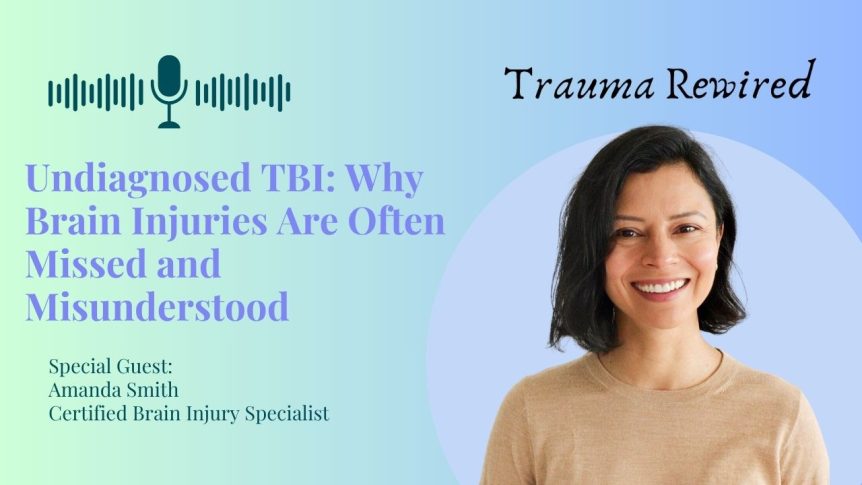
Traumatic brain injuries are incredibly common, yet many mild TBIs and concussions go unrecognized. And when the symptoms of a brain injury overlap with the effects of complex trauma, it can become difficult to understand what is actually driving changes in cognition, emotional regulation, behavior, energy, and capacity.
In this episode of Trauma Rewired, Jennifer Wallace and Elisabeth Kristof are joined by Amanda Smith, certified brain injury specialist, applied neurology pain and performance coach, NSI educator, and founder of Amanda’s Way, to explore the intersection of traumatic brain injury and complex trauma.
Amanda shares her own experience recovering from concussion and whiplash and explains why symptoms such as brain fog, fatigue, irritability, emotional reactivity, poor concentration, sleep disruption, sensory sensitivity, and reduced capacity can easily be attributed to trauma, anxiety, depression, or stress when an underlying brain injury may also be contributing.
Together, they explore how TBI can change the brain’s ability to process visual, vestibular, sensory, and cognitive information; why everyday inputs can require significantly more resources after injury; and how reduced fuel and capacity can affect everything from relationships and work to emotional regulation and rehabilitation.
The conversation also examines why practitioners working with trauma and the nervous system need a foundational understanding of concussion and TBI—and why those working with brain injury populations benefit from understanding the effects of complex trauma, chronic stress, and nervous system patterns.
Rather than pushing through symptoms, recovery begins with understanding what the nervous system is actually experiencing, assessing capacity, working with the minimum effective dose, and recognizing when additional rehabilitation, referral, or collaborative care may be needed.
In This Episode
- What traumatic brain injury and mild TBI can look like
- Why many concussions and mild TBIs go undiagnosed
- The overlap between TBI, anxiety, depression, PTSD, and complex trauma symptoms
- How brain injury can affect emotional regulation, cognition, memory, vision, and behavior
- Why irritability, withdrawal, overwhelm, and reduced capacity may emerge after concussion
- The relationship between complex trauma and persistent post-concussion symptoms
- Why women and other vulnerable populations may experience additional barriers to recovery
- How TBI can increase the energetic demands placed on the brain
- Visual, vestibular, sensory, and cognitive processing after brain injury
- Why pushing through symptoms can create diminishing returns
- Fuel, capacity, assessment, reassessment, and the minimum effective dose
- How Neurosomatic Intelligence can support individualized nervous system work
- Why practitioners need to recognize when referral or collaborative care is appropriate
- Beginning with simple awareness of breath, energy expenditure, restoration, and capacity
- The importance of compassion for ourselves and others when we cannot see what another nervous system has experienced
Featured in This Episode
BECOMING TBI & CONCUSSION INFORMED — LIVE WORKSHOP
If you work with the nervous system, understanding concussion and traumatic brain injury is essential. Post-concussion symptoms can present as fatigue, overwhelm, emotional reactivity, difficulty concentrating, sensitivity to sound or light, inconsistent progress, or reduced capacity for stress.
Join Amanda Smith on September 17 for Becoming TBI and Concussion Informed, a live workshop designed to help practitioners understand how a history of concussion, mild TBI, or head and neck trauma may be affecting what they observe in their clients.
Learn to ask better questions, adapt your approach, recognize when referral or collaboration is needed, and work with greater clarity and confidence.
Amanda Smith is a certified brain injury specialist, applied neurology pain and performance coach, founder of Amanda’s Way, and educator in the Neurosomatic Intelligence Coaching Certification. Her work integrates applied neurology, nervous system education, and rehabilitation to support people navigating traumatic brain injury and persistent post-concussion symptoms.
Offerings & Resources
START HERE — FREE NERVOUS SYSTEM TRAINING
Begin learning how to work with your nervous system with our free two-week Rewire Trial:
NEUROSOMATIC INTELLIGENCE COACHING CERTIFICATION
Learn to work with the nervous system through an integrative framework combining applied neurology, somatics, trauma-informed education, and nervous system assessment.
WATCH TRAUMA REWIRED ON YOUTUBE
YouTube: youtube.com/@TraumaRewired
EXPLORE JENNIFER’S WORK
Explore psychedelic neuroscience, nervous system preparation and integration, neuroplasticity, and harm reduction with Jennifer on Sacred Synapse:
www.illuminatedwithjennifer.com
JOIN OUR COMMUNITY
Connect with the Trauma Rewired community on Facebook:
facebook.com/groups/761101225132846
CONNECT WITH TRAUMA REWIRED
Instagram: instagram.com/trauma.rewired